02Nov
One of the greatest financial mistakes a person can make is to spend their entire working life earning money without deliberately building wealth. Imagine spending 40 years waking up early, travelling to work, meeting deadlines, earning a salary, paying bills, raising a family and fulfilling your financial responsibilities. You have worked hard throughout your adult life, yet retirement arrives and you discover that your income has stopped, your expenses have not disappeared, and you have very few assets capable of supporting you. For many people, this is an uncomfortable possibility. Society often teaches us to pursue good jobs, earn higher salaries and work towards financial stability. Although these are worthwhile goals, they do not automatically translate into wealth. A person can earn a substantial income for decades and still struggle financially if everything they earn is spent on maintaining their lifestyle. The real question, therefore, is not simply how much money you earn, but what happens to the money after it enters your account. Does it disappear into recurring expenses, or are you deliberately directing a portion of it towards assets that could appreciate in value, generate income or provide financial security in the future?. Understanding the difference between earning an income and building wealth is essential for anyone who wants to move beyond financial survival and create a more secure future.
Income Is not the same as Wealth
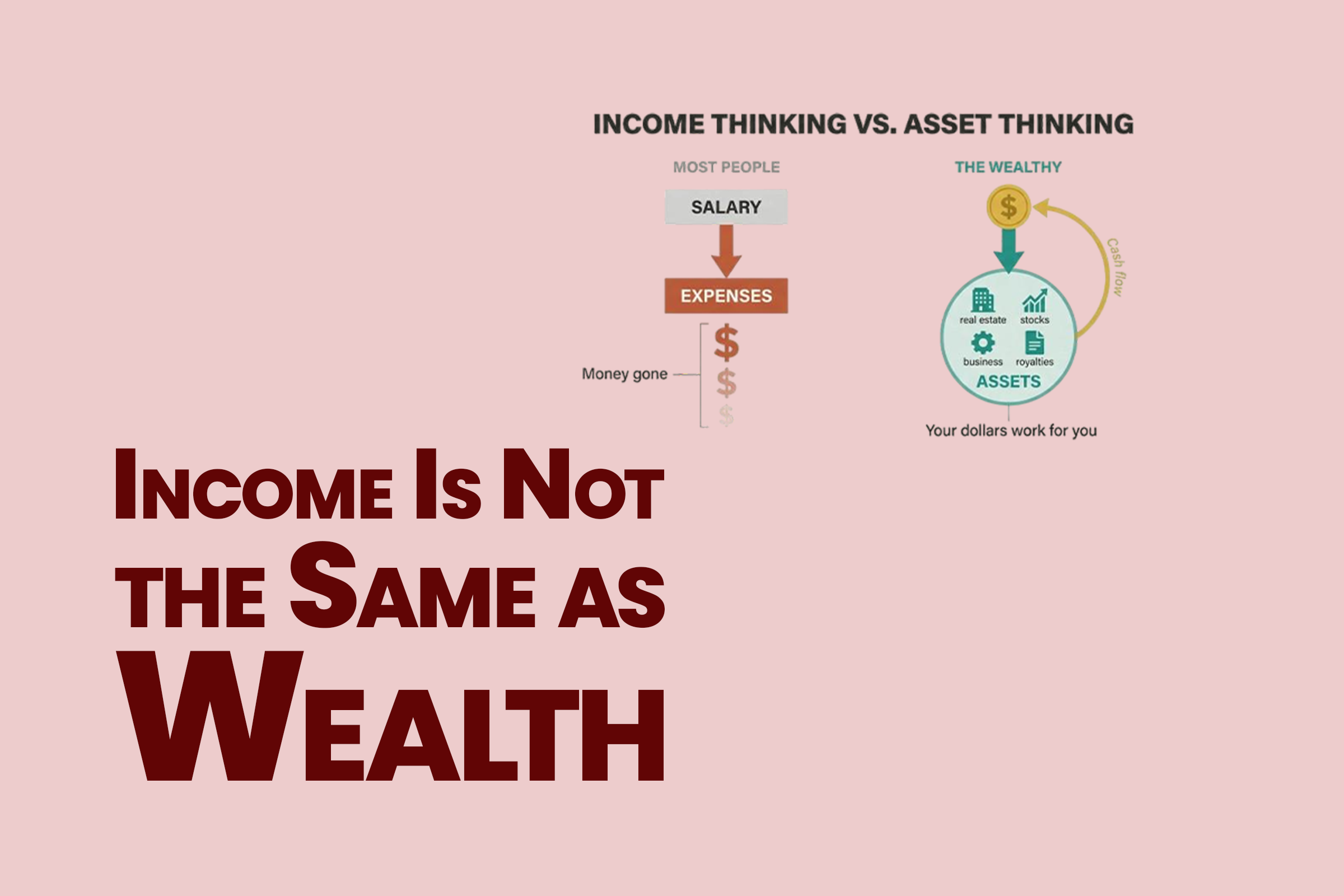
Income is the money you receive through employment, business activities, professional services, investments or other sources. Wealth, on the other hand, is built through the accumulation of valuable assets over time, after accounting for liabilities. These assets may include property, productive businesses, investments and other holdings that contribute to your overall financial position. The distinction matters because income is a flow of money, while wealth reflects what you have accumulated and retained. Your salary may provide the resources to pay your bills and meet your needs, but your financial position depends partly on how effectively you use those resources to build assets and manage debt. Consider two individuals who earn the same monthly salary. The first spends almost everything on living expenses, lifestyle upgrades and purchases that lose value. The second manages expenses carefully, develops financial knowledge and consistently allocates part of their income towards suitable investments. Although their earnings are identical, their financial positions may look very different after several years. The second individual is not necessarily wealthier because they earn more. Rather, they have made a deliberate decision to use part of their income to build a financial foundation that can extend beyond their working years. This is the missing link for many earners: income creates the opportunity to build wealth, but financial decisions determine what happens to that opportunity.
Why Working for Decades May Not Lead to Financial Freedom
Your Lifestyle Expands Alongside Your Income : An increase in income should create an opportunity to strengthen your finances, yet it can also encourage higher spending. A better salary may lead to a more expensive apartment, a newer vehicle, more frequent travel and additional financial commitments. When every increase in earnings is matched by an increase in expenditure, the amount available for saving and investing remains limited. This pattern can continue for decades without producing the financial security a person expects. The solution is not to avoid enjoying the rewards of hard work, but to ensure that lifestyle improvements do not consume every opportunity to build wealth.
Saving Money Is Important, but It Is Only Part of the Plan : Savings provide liquidity, help cover emergencies and reduce dependence on borrowing when unexpected expenses arise. However, a long-term financial plan may also need to consider inflation, investment risk, future income needs and opportunities for asset ownership. Money that remains uninvested can lose purchasing power over time when prices rise. This does not mean that savings are unnecessary or that every available naira should be invested. It means that financial security requires a thoughtful balance between accessible savings, manageable liabilities and investments suited to your goals and circumstances.
Financial Ignorance Can Make Earning More Expensive: A high income cannot protect you from poor financial decisions. Without sufficient knowledge, you may commit money to unsuitable investments, borrow excessively, misunderstand contractual obligations or mistake attractive promises for reliable opportunities. I have consistently emphasized the importance of financial education and the need to develop your financial intelligence. As I have stated, “What you know determines how far you go.”. Wealth creation requires more than access to money. It requires the ability to assess opportunities, understand risks, ask informed questions and make decisions based on evidence rather than pressure or excitement. Before committing your money to any investment, investigate the people and organisation behind it, examine the relevant documents, understand how returns are expected to be generated and consider what could go wrong. Do not allow the desire to make money to prevent you from asking the right questions. Financial education does not guarantee that every investment will succeed, but it can help you make better-informed decisions. The more you understand about money, the better equipped you are to evaluate opportunities and recognise the risks involved.
You May Be Depending Entirely on Your Ability to Work: When your salary or professional fee is your only meaningful source of income, your financial life remains closely tied to your ability to keep working. Illness, job loss, retirement or changes in business conditions can reduce that income, sometimes unexpectedly. This is one reason I believe asset ownership deserves serious consideration in a long-term financial plan. Depending on the asset and its performance, investments may generate income, appreciate in value or provide resources for future needs. Nevertheless, not every asset produces regular cash flow, and some require ongoing expenses or may be difficult to sell quickly. The objective is to develop a financial structure that does not depend entirely on one source of earnings. Building that structure takes planning, patience and consistent decisions over time. The earlier you begin to understand your options and prepare for the future, the more time you may have to work towards your financial goals.
Asset Ownership: A Practical Step Towards Long-Term Wealth
Once you recognize the difference between earning money and building wealth, the next step is to examine how you can gradually convert a portion of your income into suitable assets. The right approach depends on your financial obligations, available capital, risk tolerance, investment horizon and personal goals. For some people, this may involve building a business. Others may explore diversified financial investments or real estate. Property attracts many long-term investors because land and buildings can serve different purposes, including personal use, commercial activity, leasing or potential appreciation. However, I want you to understand that property is not automatically profitable ; location, title, infrastructure, market demand, costs and the ability to sell all matter. An investment decision should be based on proper research and a clear understanding of what you are acquiring. John C. Bogle, founder of Vanguard, wrote in The Clash of the Cultures: Investment vs. Speculation, “Time is your friend; impulse is your enemy.” I believe this principle is particularly relevant to long-term investing. Rather than making decisions based on fear of missing out, take the time to understand what you are buying and how it fits into your wider financial plans. You do not need to acquire every type of asset at once. Begin by understanding your finances, establishing an appropriate emergency reserve, managing expensive debt and setting realistic investment goals. Then assess opportunities carefully and invest only when you understand the commitments and risks involved.
Start Building Wealth Before Retirement Becomes Urgent

You do not have to wait until you earn a large salary before you begin thinking seriously about wealth. What matters is developing sound financial habits, improving your understanding of money and making decisions that reflect the future you want to create. Start by reviewing your income and expenses. Identify how much you can reasonably save, establish priorities, reduce unnecessary financial leakage and learn about asset classes before investing. As your income grows, consider directing part of that increase towards your long-term goals rather than automatically increasing your spending. Most importantly, measure progress by more than your monthly earnings. Consider your savings, liabilities, investment knowledge and the assets you are gradually accumulating. These measures provide a broader picture of your financial position. Working for 40 years should give you more than memories of the bills you paid and the responsibilities you fulfilled. It should also be an opportunity to build a foundation for the years when you may no longer want or be able to work at the same pace. The question is not only whether you are earning enough today. It is whether the decisions you make with today's income are helping you prepare for tomorrow. Your future financial security begins with the choices you make now. Learn, plan, assess opportunities carefully and take deliberate steps towards owning assets that support your goals.
Comments
